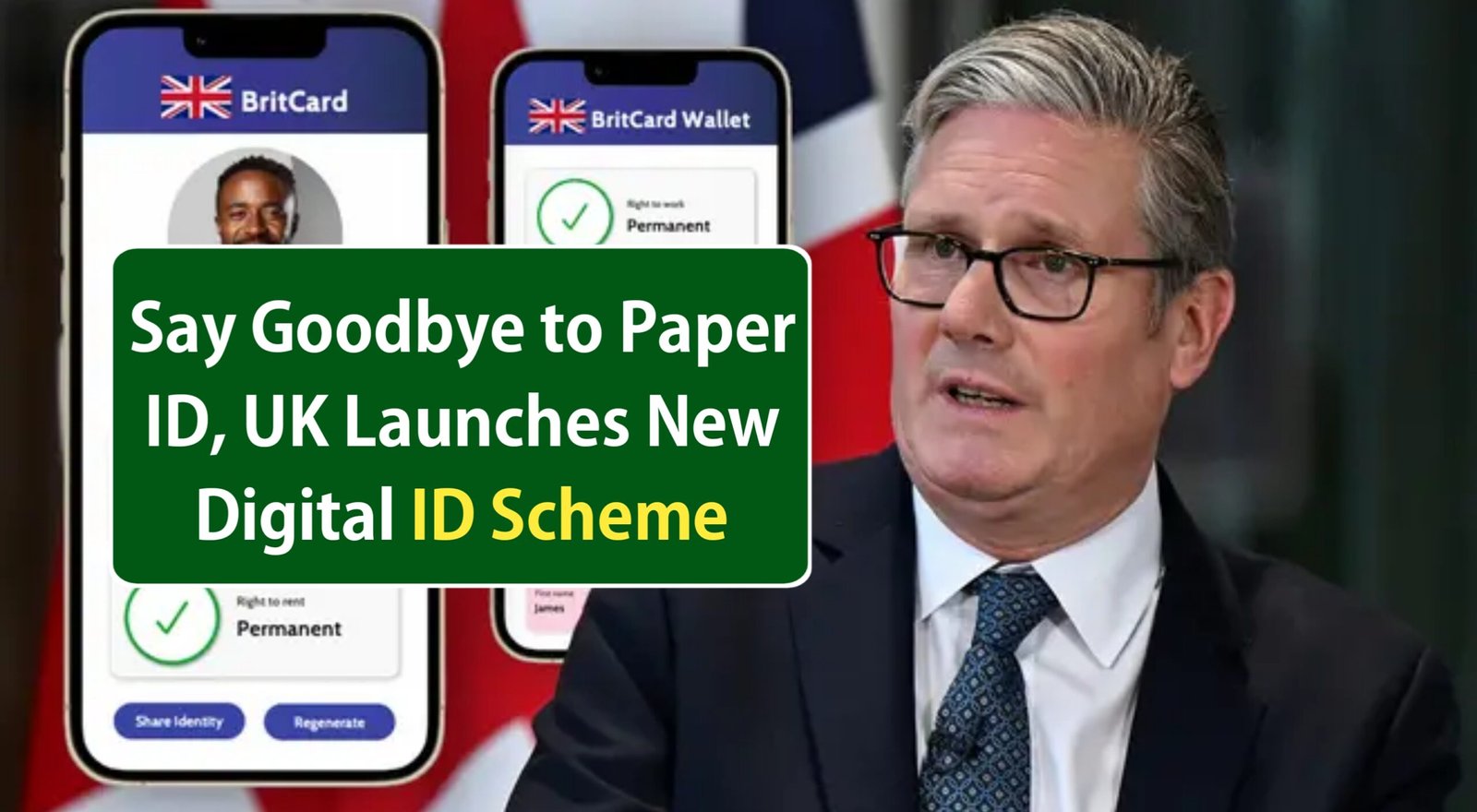
The United Kingdom is now stepping into a major transformation by launching its brand-new Digital ID Scheme — a system designed to replace traditional paper-based identification with a more secure, faster and modern digital identity. This move reflects the growing demand for convenience, online verification, and stronger protection against identity fraud. For millions of UK residents, this initiative means fewer documents to carry, quicker access to services, and a more seamless digital experience across government and private platforms.
The shift away from paper ID is not just a technological update; it represents a broader change in how the UK wants its residents to interact with essential services. Whether it is banking, healthcare, travel, employment, benefits, or age-restricted purchases, Digital ID will streamline and simplify verification processes. For many, this will eliminate long waiting times, reduce paperwork, and improve data accuracy. The goal is to create a system that is easy to use for seniors, young adults, workers, students, and businesses alike.
What Is the New Digital ID Scheme?
The new Digital ID Scheme is essentially a secure digital profile that allows UK residents to prove their identity online and offline without the need for physical documents such as passports, driving licences, or paper certificates. The Digital ID will be stored on an official app or a secure digital wallet that individuals can access from their smartphone or computer whenever required.
This identity can be used to confirm your name, age, address, and other important details in a verified way. Instead of submitting photocopies, scans or paper forms, users can instantly share verified identity information with government departments, employers, or private companies. The system operates with strict security layers, ensuring that only the user controls how their information is shared. The main purpose is convenience, but the scheme also aims to cut down on fraud, reduce admin costs, and modernise the UK’s digital infrastructure.
Why the UK Is Moving Away from Paper IDs
Paper-based ID systems have been used for decades, but they come with several limitations. They can be easily misplaced, damaged, stolen, or duplicated. Many residents find it stressful to carry important documents like passports everywhere, especially when they are needed for simple tasks such as collecting parcels or verifying age. The digital system fixes these issues by offering a secure, portable and easy-to-manage alternative.
Moreover, the UK is witnessing a significant rise in online activities — from digital banking to remote job applications. In this environment, paper IDs often slow down verification processes. Digital ID will streamline these procedures, enabling faster authentication and reducing dependency on physical paperwork. The UK government also wants to cut administrative costs and improve service delivery efficiency. Paper-based systems require printing, storage, mailing and manual verification, all of which are time-consuming and expensive. By eliminating these steps, the UK aims to modernise its infrastructure and match global digital standards.
What You Can Do with the New Digital ID
The Digital ID unlocks a wide range of benefits and uses across multiple sectors. You can use it to verify your age when buying restricted items, access banking services without visiting branches, apply for benefits faster, and even travel more smoothly within certain schemes. It can also simplify the hiring process, allowing employees to verify their right-to-work status in minutes instead of days.
Healthcare systems can also make use of Digital ID. Patients will be able to access medical records, book appointments, and verify NHS details more efficiently. For private businesses, the Digital ID offers a faster way to sign up customers, check identities, and prevent fraud. Online companies, delivery platforms, telecom providers, financial institutions and e-commerce sites can integrate the new verification system to improve accuracy and reduce risk. For residents, this means less time filling forms and more time getting tasks done.
How Secure and Safe Is the Digital ID?
Security is a major concern for many UK residents, and the Digital ID Scheme addresses this by using advanced encryption and privacy-focused technology. The government ensures that the user has full control over what information they share and who they share it with. Data is stored in a secure digital wallet, which requires authentication through biometrics, passcodes or facial recognition.
Unlike paper IDs, digital identity cannot be easily duplicated or stolen. Even if a phone is lost, the identity remains protected through multi-layer verification. The system also follows strict data protection regulations under UK GDPR, ensuring that no third party can gain access without permission. The design is based on the principle of “minimum data sharing,” meaning only essential information is shared during verification, reducing privacy risks. Overall, the scheme aims to provide a safer alternative to outdated paper documents by ensuring that identity theft becomes significantly more difficult.
How the Digital ID Will Change Daily Life
For everyday tasks, the Digital ID will bring noticeable improvements. You will be able to open a bank account, set up utilities, complete tenancy agreements, or claim benefits without long verification delays. Collecting parcels will become easier because digital verification can replace physical ID checks. Many online services will also allow instant identity confirmation, making transactions smoother.
For travellers, the scheme may open the door to future digital border checks or easier domestic verifications. For job seekers and students, paperwork will reduce drastically, allowing quicker onboarding and faster admissions. Businesses will also benefit by lowering administrative overheads and minimising identity fraud. These small changes add up to save hours of waiting, reduce stress, and create a more efficient daily experience.
Who Will Need the Digital ID?
The Digital ID is expected to become useful for nearly everyone living in the UK — residents, citizens, students, workers and even visitors using certain services. While it may not replace physical passports for international travel, it will gradually become a standard requirement for online verifications, government services, financial transactions, and age-restricted purchases.
Young adults will find it especially helpful for proving age without carrying a driving licence or passport. Senior citizens can use the Digital ID to access benefits, healthcare records, and pension services more quickly. For employees, employers and landlords, the Digital ID will simplify right-to-work and tenancy checks. Although the system is not mandatory, it is expected to become widely adopted as more services begin relying on digital verification.
How to Get the UK Digital ID
Once fully rolled out, UK residents will be able to create their Digital ID through an official app or website. The process involves verifying your identity using existing documents such as your passport or driving licence. After verification, your details will be digitally stored and encrypted inside your digital wallet.
You will then be able to use this ID whenever needed. The setup process is expected to be simple, user-friendly, and accessible across all devices. Those who do not have a smartphone may still access their Digital ID on other devices or through alternative verification methods. The goal is inclusivity, ensuring everyone can participate regardless of their technical abilities.
Impact on Businesses and Government Services
Businesses will experience faster onboarding, fewer verification errors, and reduced risk of fraud. Customer registration for services like mobile networks, banks, insurance, loan applications, or online marketplaces will become significantly more efficient. Government departments will benefit from streamlined data handling, reduced paperwork, and better accuracy in public records.
Local councils, NHS services, tax departments, and social care providers will now have quicker ways to confirm identity, reducing queues and improving response times. This digital shift is expected to save millions of pounds in administrative costs, helping taxpayers indirectly.
Concerns and Common Misconceptions
Many people worry that Digital ID means the government will track their activities. However, the system is designed with strong privacy protections. Your data is not automatically shared — you must give permission each time. Others fear that Digital ID means physical IDs will become useless. In reality, paper documents will still exist; the digital system simply offers a more convenient option.
Some also think digital identity is only for tech-savvy residents. The government is designing the platform to be accessible, with support options for those who are not comfortable using smartphones or computers. Concerns about hacking are addressed through multilayer security, biometric protection and encrypted storage.
Final Thoughts:
The UK’s new Digital ID Scheme marks a major milestone in digital transformation. By eliminating paper-based identification barriers, the country is preparing for a more modern, efficient and secure future. Residents will experience faster services, fewer delays, and enhanced protection from identity fraud. Whether accessing healthcare, banking, benefits, or employment, the Digital ID is set to simplify life across the UK.
The transition will take time, but the improvements will be long-lasting. As the digital system expands, UK residents can look forward to a world where identity verification is instant, secure, and stress-free — truly saying goodbye to paper ID forever.