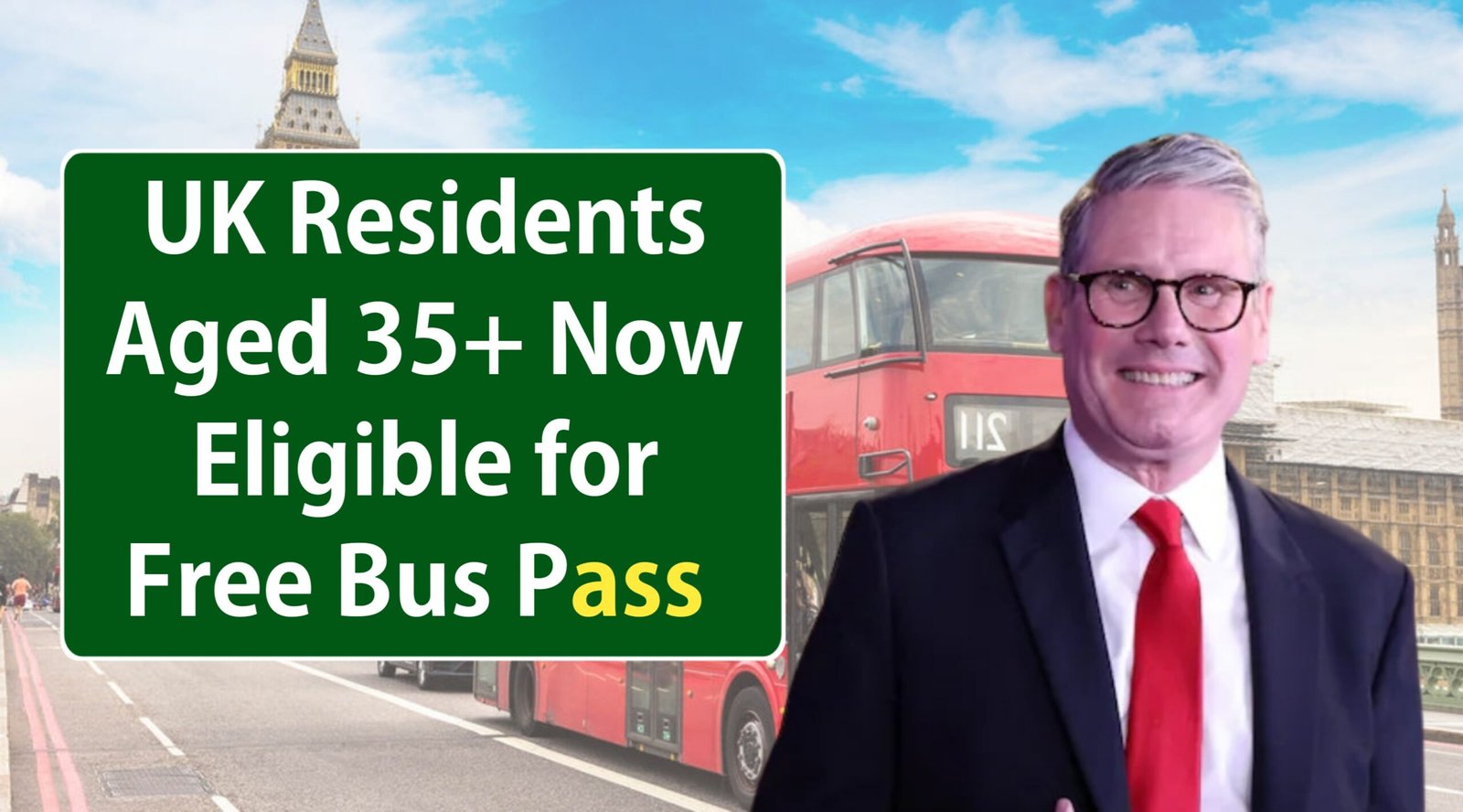
The introduction of a free bus pass for UK residents aged 35 and above has created a major buzz across the country. Traditionally, free bus passes have been associated with pensioners, disabled individuals, and certain concession categories, but this new rule opens the door for millions of middle-aged adults. The eligibility framework is designed to support people facing increased financial pressure, encourage greener transport, and simplify travel for those who rely heavily on public services.
The new 35+ eligibility applies to UK residents who can prove long-term residence status and meet simple identity verification criteria. Whether someone is employed, self-employed, seeking work, or managing family responsibilities, they can apply as long as they meet the minimum age requirement and agree to the scheme’s usage rules. The age verification is based on official documents like a passport, driving licence, or government-issued ID. This broader eligibility means that people who previously did not qualify due to being far from retirement age can now enjoy significant savings on their daily commute. It also ensures access to essential services, particularly for individuals who rely on buses for work, healthcare, and education-related travel.
The scheme’s design is built around inclusivity, taking into account the shifting economic scenario in the UK where transport costs have become a major monthly expense. For many users aged 35 and above, the free bus pass is not just a travel perk but a financial relief measure, especially for those living in urban areas with higher transportation fares. The eligibility conditions are intentionally kept simple to ensure faster applications and reduce unnecessary documentation. For people living in both rural and urban areas, the bus pass opens up flexible, free travel options within local and regional boundaries.
Why the UK Government Introduced This New Age-Based Policy
One of the major reasons behind lowering the free bus pass age threshold to 35 is the growing financial strain on working-age adults. Rising living costs, high rental rates, increasing fuel prices, and general inflation have made commuting a significant burden. Many people aged 35+ fall into a category where they are balancing jobs, childcare, household expenses, or even caring for elderly parents. Providing free bus travel helps ease this pressure.
Another motivation behind this policy is environmental. The UK has been pushing for greener travel alternatives and encouraging a shift away from cars. By offering a free bus pass to middle-aged adults, the government hopes to reduce road congestion, lower emissions, and promote public transport usage. This age group is seen as responsible travellers who often commute consistently for work, shopping, or errands. Free bus access can significantly increase the number of frequent users on local routes.
Additionally, public transport operators across various regions have faced financial challenges due to fluctuations in passenger numbers. Introducing a broader free travel scheme helps stabilise ridership, ensuring that essential bus services remain active and well-funded. It also supports job creation within the transport sector by maintaining demand for drivers, route managers, and support staff.
Overall, the policy reflects a long-term vision that blends economic support, environmental awareness, and public transport sustainability. It directly acknowledges the struggles of working-age individuals and offers a practical solution that makes everyday life easier. For millions of UK residents aged 35 and above, this scheme represents both financial relief and improved mobility.
What Benefits You Can Expect After Receiving the Bus Pass
Once eligible applicants receive the free bus pass, they gain access to a wide range of benefits. The biggest advantage is, of course, the ability to travel without paying for standard bus fares. For many people who rely on daily commuting, this can save hundreds of pounds per month. Whether someone uses buses for getting to work, attending appointments, visiting family, or running errands, the pass eliminates the need to buy single, return, or seasonal tickets.
The pass also provides flexibility. Holders can travel across various local routes and, in some cases, intercity or regional routes depending on their local council’s scheme rules. Many councils also offer extended hours, meaning travel is not limited to off-peak times. This makes it useful for those who work early shifts, night shifts, or rotational schedules.
Additionally, the pass encourages healthier and more active lifestyles. When travel becomes free, people are more likely to explore local areas, use buses for exercise-related activities like park visits, or participate in community events. It also promotes social connectivity by making it easier to visit friends and family without worrying about fare costs.
For individuals with lower incomes, single parents, freelancers, and part-time workers, the pass acts as a financial cushion. They can reallocate saved money toward groceries, utilities, rent, or childcare. For organisations and businesses, this also means employees can arrive at work more reliably and affordably, reducing lateness caused by fare issues.
Lastly, free travel also promotes equality. Transport barriers often affect individuals who cannot drive or afford personal vehicles. With the free bus pass, the government aims to reduce inequality by ensuring everyone aged 35+ can access essential services without financial worry.
Step-by-Step Guide: How to Apply for the Free Bus Pass
Applying for the 35+ free bus pass is straightforward. While the procedure may vary slightly depending on your region (England, Scotland, Wales, or Northern Ireland), the overall steps remain similar. The online application method is the fastest and most preferred option.
To start, applicants must visit their local council’s transport portal, where the official application section for concession passes is available. After entering basic details like name, date of birth, and full address, the system will request identity and age verification. Documents such as a UK passport, driving licence, or any government ID with proof of age will be required. You may also need to submit proof of residence like a council tax bill, tenancy agreement, or utility statement.
Once the identity documents are uploaded, the user must provide a passport-sized photo that will be printed on the physical card. Most portals allow users to take a live photo using a smartphone camera, ensuring a smooth digital process.
After submitting the application, the verification department checks the details. This typically takes between a few working days to a couple of weeks depending on the demand. If approved, the pass is printed and mailed to your registered address. Some councils also offer a digital version that can be stored on your mobile.
Applicants with mobility issues or low digital literacy can apply offline by visiting local libraries, council offices, or designated travel centres. Staff members assist with filling out forms, verifying documents, and taking photographs.
Important Rules and Conditions You Must Follow
While the free bus pass offers major advantages, there are certain rules users must follow to avoid penalties or cancellation. The pass must only be used by the person to whom it is issued. Using someone else’s pass or lending yours to another traveller is considered misuse and may result in permanent suspension.
The pass must be shown to the driver or scanned at the reader every time you board. Failing to present a valid pass can lead to refusal of travel. Additionally, the pass must remain in good condition. Damaged cards may not scan properly and could require replacement for a small administrative fee.
Users are also expected to respect bus staff, follow safety rules, and maintain appropriate conduct during travel. Misbehaviour, repeated complaints, or misuse of transport facilities can affect eligibility.
Some councils may impose restrictions such as limiting free travel to certain zones or requiring additional passes for long-distance routes. Applicants should check their local scheme details after receiving the card.
Final Thoughts
The introduction of a free bus pass for residents aged 35 and above marks a major step in making transportation more affordable and accessible. It helps working-age adults who deal with daily expenses and financial responsibilities. It supports greener travel, reduces traffic congestion, and strengthens public transport networks nationwide. For millions of residents, this scheme is more than a benefit—it is a lifeline that makes everyday mobility easier, cheaper, and more reliable.